Lifestyle Changes and Patient Engagement Through Care Coordination Improve Blood Pressure Control
Lifestyle Changes and Patient Engagement Through Care Coordination Improve Blood Pressure Control
Mark was able to get his BP under control through lifestyle modifications and coaching from his care manager.
.jpg)
%20(1).jpg?width=968&height=691&name=Patient%20story%20-%20mark%20-%20tablet%20(1)%20(1).jpg)
Mark
Chronic Conditions: Hypertension and hyperlipidemia
Program: RPM
Lifestyle-Driven Primary Hypertension
Mark was enrolled in remote patient monitoring (RPM) by his primary care provider due to persistently elevated blood pressure readings rooted in lifestyle factors — most notably a high-sodium diet. While medication had a role to play, it was clear that lasting improvement would require Mark to make meaningful changes to his daily habits. What set Mark apart from the start was his embracing of RPM and the use of the Pylo blood pressure monitor, engagement with his Prevounce care manager, and a curiosity and willingness to dig into the data behind his own condition.
Tracking the Connection Between Sodium and Blood Pressure
Mark worked with his care manager to track his daily sodium intake and compare those figures directly against his blood pressure readings. What emerged was a clear pattern: on days when his sodium intake climbed, so did his blood pressure. In partnership with the care manager, Mark created a line graph plotting his daily dietary salt consumption against his average blood pressure readings over time, demonstrating a striking positive correlation between the two.
This level of engagement transformed the care relationship. Mark became a more active collaborator in his own care, using additional data to drive decisions.
-1.jpg?width=700&height=395&name=IMG_5541%20(2)-1.jpg) Fig. 1
Fig. 1
Figure 1: Line graph Mark shared with his care manager showing the correlation between sodium intake and blood pressure.
Building New Habits
Motivated by what the data showed and his care manager’s encouragement and guidance, Mark made a series of deliberate changes to his lifestyle. He began a daily exercise routine. He also rethought his approach to meal preparation and grocery shopping — paying closer attention to the sodium content of foods that he regularly enjoyed.
These were targeted, sustainable changes informed by real data and supported by ongoing conversations with his care manager.
Stabilized Blood Pressure
The results were measurable. Mark reduced his average daily sodium intake from approximately 1,950 mg to around 1,250 mg. As his diet improved and his activity level increased, his blood pressure trended steadily downward and became more stable over time.
Mark's case is a powerful example of what becomes possible when patients are enrolled in RPM, find it easy to use their monitoring device, and then engaged, informed, and supported by a well-trained care manager. Through consistent vitals monitoring, proactive coaching, and his own determination to understand the data, Mark turned a chronic condition into a manageable one.
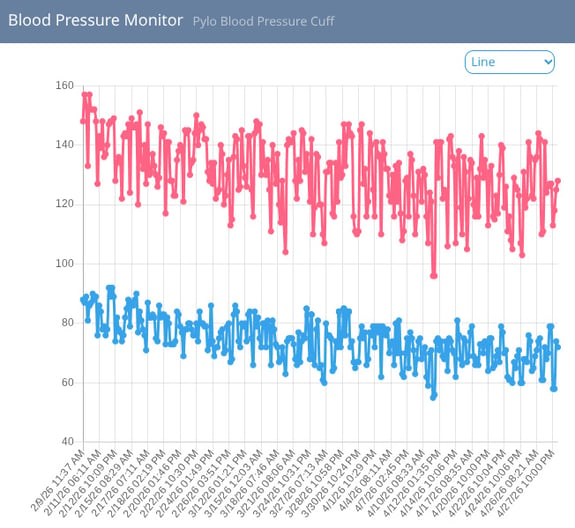 Fig. 2
Figure 2: Mark’s systolic and diastolic blood pressure over time, showing a clear downwards trend towards controlled hypertension.
Real story featuring real patient. Patient name has been changed to protect privacy.
We’re with you at every step of your care management
We help make sure there’s always someone there for your patients. Learn more about our care management services today.